To the perfection of this high Contemplation may no man come till he be first reformed in soul to the likeness of Jesus in the perfection of virtues: nor can any man living in mortal body have it continually and habitually in the height of it, but by times when he is visited. And as I conceive by the writing of holy men, it is a full short time, for soon after he returneth to a sobriety of bodily feeling; and of all this work charity is the cause. Thus, as I understand St Paul speaks of himself: For whether we be beside ourselves, it is to God, or whether we be sober, it is for your cause; it is the love of Christ that constraineth us; that is, whether we overpass our bodily senses in Contemplation, or we are more sober to you in our bodily feeling, the love of Christ straineth us. (John Climacus)
The Latin origins of contemplate are con (or com) meaning together or with or at one and templum to cut, divide, or separate. You can see the word temple, as in a place set aside for auguries.
To contemplate is to be at one with what is separated, to be at one with what is set aside, what is sacred.
We typically think of the contemplative being separated from the world. But more accurately the contemplative is bound to that which is separated.
To both know and experience God is to be in deep relationship with the extraordinary. To the extent we are in deep relationship with the sacred we may seem separated from the world.
But if our God is fully engaged with and deeply concerned with the world, what does this say of the contemplatives stance?
skip to main |
skip to sidebar

Blog Archive
-
▼
2010
(255)
-
▼
March
(31)
- In answer to that which thou saidst, that I spake ...
- But thou wilt say that I speak too high in this ma...
- Of this manner of prayer speaketh our Lord in holy...
- Of this kind of prayer St Paul saith thus: If I pr...
- The third sort of prayer is only in the heart with...
- Of this manner of feeling speaketh the prophet Jer...
- If the grace of it come plenteously, it is wondrou...
- And at other times there appears to him to be so m...
- There is another sort of vocal prayer which is not...
- And hereby thou mayest learn that those men (if an...
- This kind of vocal prayer is commonly most profita...
- As to these kinds of prayers that are called vocal...
- Now as to thy other question to know what prayer i...
- They that speak of this fire of love know not well...
- When thy desire and mind is gotten up, and as it w...
- But now thou wilt desire perhaps to know how thou ...
- Prayer is profitable and speedful to be used for t...
- The sum is this: draw all that thou seest and inte...
- But in destroying of sin by keeping thy heart, and...
- As to thy body, it is good to use discretion in ea...
- The second thing which it behoveth thee to have is...
- But thou wilt say, wherein did this Pharisee amiss...
- Be, therefore, busy to get humility, and hold it f...
- The feeling of this lowness and humility will put ...
- Now if thou desirest to prosecute spiritual works ...
- Now seeing virtues dispose us to Contemplation, it...
- Many a man hath the virtues of humility, patience ...
- But thou shalt ever seek with great diligence in p...
- To the perfection of this high Contemplation may n...
- To the perfection of this high Contemplation may n...
- The third sort, which is as perfect Contemplation ...
-
▼
March
(31)
About Me
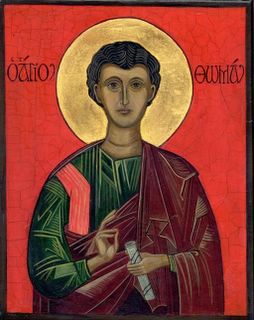
- Didymus
- Each morning I spend 30 minutes, more or less, researching and writing on a passage of scripture. This is principally a form of spiritual self-discipline. But comments and questions are welcome.
No comments:
Post a Comment