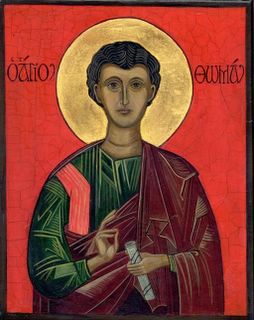
I have been in conversation with Maximos for 142 days. My original intent was to draw on the Philokalia as a segue to Yom Kippur. It has been much more than that.
We have disagreed regarding passion. Maximos mistrusts it and encourages its suppression. I perceive passion to be a gift, but like all God's gifts requiring purposeful and mindful use.
In arguing across the 1400 years separating us, I am sure I did not always fully understand the argument Maximos was making. But the discussion has been productive.
In defending the passions I found a principle. How does the passionate thought, attitude, action, whatever... effect my relationship with God and with my neighbor?
To the extent these relationships would be weakened or division would result, we ought be very careful regarding our passions. God intends for us to heal and bind, not hurt and divide.
Like all principles, this one can be ambivalent. Application will not resolve every ambiguity. In seeking to strengthen our relationships we will sometimes achieve the opposite.
But the trinity of self, neighbor, and God has, from this conversation, been lifted up in a new and powerful way. I thank God and thank Maximos for provoking this insight.
I have come to another long lacuna in my source for the Philokalia. I will use this as an opportunity to adopt a new source: The Ladder of Divine Ascent sometimes known as the Climax by Saint John Climacus.
This Saint John was born a few years before Maximos. While Maximos was active in the imperial capital of Constantinople, John chose the ascetic life at St. Catherine's in the Sinai.
The Ladder of Divine Ascent is a principal Lenten reading in the Eastern church. This year the Great Lent of the East will begin on February 15. We are already within a season the eastern church considers pre-Lent. So for the next eight weeks or so I will draw on John Climacus for morning meditation.
The Ladder consists of short chapters rather than the convenient short paragraphs of Maximos. As a result I will be plucking certain paragraphs out of context. If you wish to read the full context Google provides an online copy.
Sunday, January 31, 2010

Saturday, January 30, 2010
Some thoughts are simple, others are composite. Thoughts which are not impassioned are simple. Passion-charged thoughts are composite, consisting as they do of a conceptual image combined with passion. This being so, when composite thoughts begin to provide a sinful idea in the mind, many simple thoughts may be seen to follow them. For instance, an impassioned thought about gold rises in someone's mind. He has the urge mentally to steal the gold and commits the sin in his intellect. Then thoughts of the purse, the chest, the room and so on follow hard on the thought of the gold. The thought of the gold was composite - for it was combined with passion - but those of the purse, the chest, and so on were simple; for the intellect had no passion in relation to these things. And the same is true for every thought - thoughts of self-esteem, women, and so on. For not all thoughts which follow impassioned thought are themselves impassioned, as our example has shown. From this then we may know which conceptual images are impassioned and which are not. (Maximos the Confessor)
Sometimes - probably more than I realize - I do not have sufficient understanding of the psychological and spiritual doctrines of his age to fully hear Maximos. This is surely one of those moments.
What I can recognize is a concern for misdirected passion. In this I am reminded of an insight of St. John Climacus, a contemporary of Maxmos:
I have seen impure souls crazed for physical love; but when these same souls have made this grounds for repentance, as a result of their experience of sexual love they have transferred the same eros to the Lord, They have immediately gone beyond all fear and been spurred to insatiable love for God. This is why the Lord said to the chaste harlot not that she had feared, but that she had loved much, and was readily able to repel eros through eros.
Eros is not innately evil. The erotic can, if directed by divine purpose, draw us closer to one another and to God. Again, from John Climacus:
Let them take courage who are humbled by their passions. For even if they fall into every pit and are caught in every snare, when they attain health they will become healers, luminaries, beacons and guides to all, teaching about the forms of every sickness and through their own experience saving those who are about to fall.
Sometimes - probably more than I realize - I do not have sufficient understanding of the psychological and spiritual doctrines of his age to fully hear Maximos. This is surely one of those moments.
What I can recognize is a concern for misdirected passion. In this I am reminded of an insight of St. John Climacus, a contemporary of Maxmos:
I have seen impure souls crazed for physical love; but when these same souls have made this grounds for repentance, as a result of their experience of sexual love they have transferred the same eros to the Lord, They have immediately gone beyond all fear and been spurred to insatiable love for God. This is why the Lord said to the chaste harlot not that she had feared, but that she had loved much, and was readily able to repel eros through eros.
Eros is not innately evil. The erotic can, if directed by divine purpose, draw us closer to one another and to God. Again, from John Climacus:
Let them take courage who are humbled by their passions. For even if they fall into every pit and are caught in every snare, when they attain health they will become healers, luminaries, beacons and guides to all, teaching about the forms of every sickness and through their own experience saving those who are about to fall.
Friday, January 29, 2010

In its natural state, the human intelligence is subject to the divine intelligence and itself rules over the non-intelligent element in us. Let this order be maintained in all things, and there will be no evil among creatures nor anything which draws us towards evil. (Maximos the Confessor)
Maximos is grappling with the mind-body problem. Like Plato and Aristotle he sees mind and body as separate functions engaged in a struggle for control.
I am not certain such a division can be clearly claimed. God created body and mind in profound relationship with one another. Where one begins and the other ends can be theorized - and the theories may have clinical and intellectual value - but the reality remains messy.
Our limitations urge us to separate, categorize, and - we hope - simplify. The tendency can be a helpful tool. But we should not allow our limitations or our tools to obscure the deep relationships that characterize complex reality.
Thursday, January 28, 2010
Some say that there would be no evil in the created world unless there were some power outside this world dragging us towards evil. But this so-called power is in fact our neglect of the natural energies of the intellect. For those who nurture these energies always do good, never evil. If this, then, is what you too wish to do, get rid of negligence and you will also drive out evil, which is the wrong use of our conceptual images of things, followed by the wrong use of the things themselves. (Maximos the Confessor)
We drag ourselves down. No external Satan is needed.
The fall is caused by neglect of our own best tendencies.
Maximos' use of energies requires considerable context. Aristotle, especially in the Nichomachian Ethics, gives the proper use of ἐνέργεια or energeia significant attention.
The scholar and translator Joe Sachs has explained, "In the Nicomachean Ethics, everything depends upon the idea of an active condition (hexis) that can be formed by a deliberately repeated way of being-at-work (energeia), and that can in turn set free the being-at-work of all the human powers for the act of choice."
If our being-at-work is neglected, or distracted, or misdirected we will increasingly experience a lack of energy, progress, and meaning.
We drag ourselves down. No external Satan is needed.
The fall is caused by neglect of our own best tendencies.
Maximos' use of energies requires considerable context. Aristotle, especially in the Nichomachian Ethics, gives the proper use of ἐνέργεια or energeia significant attention.
The scholar and translator Joe Sachs has explained, "In the Nicomachean Ethics, everything depends upon the idea of an active condition (hexis) that can be formed by a deliberately repeated way of being-at-work (energeia), and that can in turn set free the being-at-work of all the human powers for the act of choice."
If our being-at-work is neglected, or distracted, or misdirected we will increasingly experience a lack of energy, progress, and meaning.
Wednesday, January 27, 2010
Five things make a soul cut itself off from sin: fear of men, fear of judgment, hope of future reward, love of God and, lastly, the prompting of conscience. (Maximos the Confessor)
I will admit to being influenced by Stoic understandings: might the soul be a spark of God residing with us?
Might conscience be the voice of divine awareness and potentiality within us?
Is it the conscience that recognizes our separation from God?
Is it the conscience that recognizes the same fractured characteristic in our neighbors?
Is it the conscience that urges us to reclaim the relationship that we innately share with God and neighbor?
I will admit to being influenced by Stoic understandings: might the soul be a spark of God residing with us?
Might conscience be the voice of divine awareness and potentiality within us?
Is it the conscience that recognizes our separation from God?
Is it the conscience that recognizes the same fractured characteristic in our neighbors?
Is it the conscience that urges us to reclaim the relationship that we innately share with God and neighbor?
Tuesday, January 26, 2010

If you wish to find the way that leads to life, look for it in the Way who says, "I am the way, the door, the truth, and the life", and there you will find it. Only let your search be diligent and painstaking, for "few there are that find it" and if you are not among the few you will find yourself with the many. (Maximos the Confessor)
The second quote is from Matthew 7:14. The original Greek is ὀλίγοι εἰσὶν οἱ εὑρίσκοντες αὐτήν or oligoi eisin oi euriskontes auten.
Like Maximos, I usually focus on the noun - few - rather than the verb - find.
But look carefully at the Greek - euriskontes - and you see the origin of our English heuristics.
According to my dictionary heuristics means:
Serving to indicate or point out; stimulating interest as a means of furthering investigation; OR encouraging a person to learn, discover, understand, or solve problems on his or her own, as by experimenting, evaluating possible answers or solutions, or by trial and error: a heuristic teaching method; OR of, pertaining to, or based on experimentation, evaluation, or trial-and-error methods.
This definition is consistent with the meaning of the original Greek.
We are encouraged to undertake this way, this path, this rigorously questioning approach to faith.
Monday, January 25, 2010
The principal vices - stupidity, cowardice, licentiousness, injustice - are the "image" of the "earthy" man. The principal virtues - intelligence, courage, self-restraint, justice - are teh "image" of the "heavenly" man. As we have borne of the image of the earthy, let us also bear the image of the heavenly. (Maximos the Confessor)
I agree that these vices characterize many. But these are not the images that mislead us.
Who said something like, "Man never does bad in his own eyes"?
The images that confuse are our mistaken understandings of the virtues: when we see ourselves as intelligent, but are merely stubborn; or when we see ourselves as courageous but are arrogant; self-restrained when passive-aggressive; or just when we are punitive.
To avoid false images of our self and our relationships requires self-criticism.
To act in accordance with virtue also requires a readiness to risk and willingness to depend on God's love to use even our misunderstanding.
I agree that these vices characterize many. But these are not the images that mislead us.
Who said something like, "Man never does bad in his own eyes"?
The images that confuse are our mistaken understandings of the virtues: when we see ourselves as intelligent, but are merely stubborn; or when we see ourselves as courageous but are arrogant; self-restrained when passive-aggressive; or just when we are punitive.
To avoid false images of our self and our relationships requires self-criticism.
To act in accordance with virtue also requires a readiness to risk and willingness to depend on God's love to use even our misunderstanding.
Sunday, January 24, 2010
Do not misuse your conceptual images of things, lest you are forced to make a wrong use of the things themselves. For if a man does not first sin in his mind, he will never sin in action. (Maximos the Confessor)
A simple system that I use for engaging what Maximos offers is to apply OODA or Observation, Orientation, Decision, and Action with the best discipline I can.
What do I observe? What is real?
What orientation influences my observation? What are my biases, predispositions, my conceptual images that might obscure accurate observation? How do the orientations of others influence their observations?
Based on what is real, what is needed? What is realistic? What would best advance strong relationships and sustainably good outcomes? What is my decision? What is the group's decision? It is helpful to recognize what we are deciding so that we can be responsible for the decision.
Then I should act in accordance with this considered understanding of reality and conscious choice.
A simple system that I use for engaging what Maximos offers is to apply OODA or Observation, Orientation, Decision, and Action with the best discipline I can.
What do I observe? What is real?
What orientation influences my observation? What are my biases, predispositions, my conceptual images that might obscure accurate observation? How do the orientations of others influence their observations?
Based on what is real, what is needed? What is realistic? What would best advance strong relationships and sustainably good outcomes? What is my decision? What is the group's decision? It is helpful to recognize what we are deciding so that we can be responsible for the decision.
Then I should act in accordance with this considered understanding of reality and conscious choice.
Saturday, January 23, 2010

Both spiritual knowledge and health are good by nature, yet their contraries have been of more benefit to many people. For such knowledge may serve no good purpose where the wicked are concerned, even though, as we have said, it is good in itself. The same is true with regard to health, riches, and joy, for they are not used advantageously by such people. But certainly their contraries do benefit them. Therefore no one of them is evil in itself, even though it may appear to be evil. (Maximos the Confessor)
Maximos is surprising me or confusing me. But if I understand him correctly, I also agree with him.
When neither goodness, nor truth, nor beauty is the goal, they are very unlikely to be the outcome. In isolation from one another and from God no good at hand - spiritual knowledge, health, or riches - will bring joy.
Without love, as Paul wrote, I am nothing and I gain nothing.
Friday, January 22, 2010
Of the things contingent upon those given us by God, some are in the soul, some are in the body, and some relate to the body. Those in the soul are spiritual knowledge and ignorance, forgetfulness and memory, love and hate, fear and courage, distress and joy, and so on. Those in the body are pleasure and pain, sensation and numbness, health and disease, life and death, and so on. Some of these are regarded as good and others as evil. Not one of them is evil in itself. According to how they are used they may rightly be called good or evil. (Maximos the Confessor)
Hate is not... fear is not... pain is not... death is not... evil in itself.
It is according to how each of these things - pleasant and unpleasant - are used that determines good and evil.
Evil - Maximos is almost certainly using a form of κακός or kakos - is to be contrary to nature and harmful to the self.
Even the bad can be used for good purpose. We can engage trouble with good outcomes.
Only when we use these contingencies as cause for separation from God or neighbor do our acts spawn evil.
Hate is not... fear is not... pain is not... death is not... evil in itself.
It is according to how each of these things - pleasant and unpleasant - are used that determines good and evil.
Evil - Maximos is almost certainly using a form of κακός or kakos - is to be contrary to nature and harmful to the self.
Even the bad can be used for good purpose. We can engage trouble with good outcomes.
Only when we use these contingencies as cause for separation from God or neighbor do our acts spawn evil.
Thursday, January 21, 2010
Some of the things given to us by God for our use are in the soul, others are in the body and others relate to the body. In the soul are its powers; in the body are the sense organs and other members; relating to the body are food, money, possessions, and so on. Our good or bad use of these things given us by God, or of what is contingent upon them, reveal whether we are virtuous or evil. (Maximos the Confessor)
I am not sure where Maximos is going, but I would add that when we use these things motive, intention, and outcome are also relevant.
What is my purpose, explicit and implicit? Am I sufficiently self-aware to know and be responsible for my motivation?
What do I anticipate will be the result? Have I given goal and context enough attention to form a firm and reasonable intention?
Even with the best of motives and most noble of intentions, the outcome can surprise, disappoint, and hurt. But if I have fully engaged motive and intention, I should be ready to take responsibility for the outcome.
The outcome, good or bad, can unfold from factors far beyond motive or intention, but with God's help motive, intention, attention, courage, persistence, hope, faith, and love can achieve a great deal.
I am not sure where Maximos is going, but I would add that when we use these things motive, intention, and outcome are also relevant.
What is my purpose, explicit and implicit? Am I sufficiently self-aware to know and be responsible for my motivation?
What do I anticipate will be the result? Have I given goal and context enough attention to form a firm and reasonable intention?
Even with the best of motives and most noble of intentions, the outcome can surprise, disappoint, and hurt. But if I have fully engaged motive and intention, I should be ready to take responsibility for the outcome.
The outcome, good or bad, can unfold from factors far beyond motive or intention, but with God's help motive, intention, attention, courage, persistence, hope, faith, and love can achieve a great deal.
Wednesday, January 20, 2010

The intellect receives impassioned conceptual images in three ways: through the senses, through the body's condition and through the memory. It receives them through the senses when the senses themselves receive impressions from things in relation to which we have acquired passion and when these things stir up impassioned thoughts through the intellect; through the body's condition when, as a result either of an undisciplined way of life, or of the activity of demons, or of some illness, the balance of elements in the the body is disturbed and again the intellect is stirred to impassioned thought or to thoughts contrary to providence; through the memory when the memory recalls the conceptual images of things in relation to which we were once made passionate, and so stirs up impassioned thoughts in a similar way. (Maximos the Confessor)
And is this bad?
If the conceptual images spawned by our senses, our condition, or our memory prompt anger, lust, avarice, gluttony or other actions to diminish or endanger a healthy relationship with God, neighbor, or self, then such conceptual images are at least distracting and potentially much worse.
But conceptual images can also inspire, encourage, and remind us of what has been, or is, or can be beautiful, good, and true.
I do not hear Jesus in any way advocating dispassion. But I certainly hear encouraging a mindful and meaningful choice of passions.
Tuesday, January 19, 2010
Things are outside the intellect, but the conceptual images of these things are formed within it. It is consequently in the intellect's power to make good or bad use of these conceptual images. There wrong us is followed by the misuse of the things themselves. (Maximos the Confessor)
It is not the things - the material world or the objects of passion - that are bad in themselves. It is how my intellect chooses to conceive such things that determines good or bad.
When my conceptual understanding focuses on how such things have value (or not) to me, I am misconceiving and further fracturing reality.
But if I can fully conceive - and appreciate - how such things have value in themselves, I am cultivating a real relationship.
It is not the things - the material world or the objects of passion - that are bad in themselves. It is how my intellect chooses to conceive such things that determines good or bad.
When my conceptual understanding focuses on how such things have value (or not) to me, I am misconceiving and further fracturing reality.
But if I can fully conceive - and appreciate - how such things have value in themselves, I am cultivating a real relationship.
Monday, January 18, 2010
Just as it is easier to sin in the mind than in action, so warfare through our impassioned conceptual images of things is harder than warfare through the things themselves. (Maximos the Confessor)
By most reasonable standards I have every cause to be happy. But I struggle to achieve my conceptual images of success.
In recent weeks I have achieved goals long pursued. Yet I wonder at their value and even at the reality of achievement.
If I could shed some unhelpful concepts (and the doubts and fear they bring), I would almost certainly be in better relationship with God, neighbor and self.
By most reasonable standards I have every cause to be happy. But I struggle to achieve my conceptual images of success.
In recent weeks I have achieved goals long pursued. Yet I wonder at their value and even at the reality of achievement.
If I could shed some unhelpful concepts (and the doubts and fear they bring), I would almost certainly be in better relationship with God, neighbor and self.
Sunday, January 17, 2010

The demons fight against us either through things themselves or through our impassioned conceptual images of these things. They fight through things against those who are occupied with things and through conceptual images against those who are not attached to things. (Maximos the Confessor)
My principal demon is a desire to be desired.
This emerges from a misdirected sense-of-self or what Maximos would call a conceptual image of my self.
Through this conceptual sense of self -- detached from here, now, and reality -- I am dissatisfied and demanding.
I want to attract attention, affection, and respect.
It would be better for all, including my self, if I was more consistent in giving attention, affection, and respect.
Saturday, January 16, 2010
When the desiring aspect of the soul is frequently excited, it implants in the soul a habit of self indulgence which is difficult to break. When the soul's incensive power is constantly stimulated, it becomes in the end cowardly and unmanly. The first of these failings is cured by long exercise in fasting, vigils and prayer; the second by kindness, compassion, love and mercy. (Maximos the Confessor)
I am not sure of his diagnosis, but I like his cure.
In fasting, vigils, and prayers we open ourselves to God. With attention and thanksgiving we renew our relationship with God.
With acts of kindness, compassion, love and mercy we straighten the relationship with our neighbors.
In relationship with God and neighbor our own selves are renewed.
I am not sure of his diagnosis, but I like his cure.
In fasting, vigils, and prayers we open ourselves to God. With attention and thanksgiving we renew our relationship with God.
With acts of kindness, compassion, love and mercy we straighten the relationship with our neighbors.
In relationship with God and neighbor our own selves are renewed.
Friday, January 15, 2010
When desire grows strong, the intellect in sleep imagines things that give sensual pleasure; and when the incensive power grows strong, it imagines things that cause fear. For the impure demons, finding an ally in our negligence, strengthen and excite the passions. But holy angels, by inducing us to perform works of virtue, make them weaker. (Maximos the Confessor)
Illusions of sensual pleasure are distracting. Fear of illusions is distracting. In being distracted from what is real, we can lose our direction, and delay achieving our purpose.
Desire for what is real, excitement over what it beautiful, and a passion for what is true will compel us to perform works of virtue.
Works of virtue reinforce our engagement with reality through healing what is fractured and strengthening our relationships with God and neighbor.
Illusions of sensual pleasure are distracting. Fear of illusions is distracting. In being distracted from what is real, we can lose our direction, and delay achieving our purpose.
Desire for what is real, excitement over what it beautiful, and a passion for what is true will compel us to perform works of virtue.
Works of virtue reinforce our engagement with reality through healing what is fractured and strengthening our relationships with God and neighbor.
Thursday, January 14, 2010


Paintings by Lucian Freud (top) and Picasso (bottom)
Just as the intellect of a hungry man imagines bread and that of a thirsty man water, so the intellect of a glutton imagines a profusion of foods, that of a sensualist the forms of women, that of a vain man worldly honour, that of an avaricious man financial gain, that of a rancorous man revenge on whoever has offended him, that of an envious man how to harm the object of his envy, and so on with all the other passions. For an intellect agitated by passions is beset by impassioned conceptual images whether the body is awake or asleep. (Maximos the Confessor)
I do not - yet - disagree with my partner in discussion and discovery.
What Maximos describes is certainly true. The distraction and dysfunction of these mis-directed passions is obvious.
I am tempted to read ahead, so that I might prepare an argument. I expect we may yet disagree. But it is better to listen and to fully embrace each opportunity for agreement, and quiet my passion for argument.
Wednesday, January 13, 2010
No sinner can escape future judgment without experiencing in this life either voluntary hardships or afflictions he has not chosen. There are said to be five reasons why God allows us to be assailed by demons. The first is so that, by attacking and counter-attacking, we should learn to discriminate between virtue and vice. The second is so that having acquired virtue through conflict and toil, we should keep it secure and immutable. The third is so that, when making progress in virtue, we should not become haughty but learn humility. The fourth is that having gained some experience of evil, we should "hate it with perfect hatred." The fifth and most important is so that, having achieved dispassion we should forget neither our own weakness nor the power of Him who has helped us. (Maximos the Confessor)
Maximos and I agree on a great deal, but we disagree as to purpose.
He perceives a common need to achieve dispassion and virtue. We are fallen. If we are to be redeemed we must seek, welcome, and receive God's cleansing discipline.
I perceive we are to be partners with God in healing a fractured creation. We may very well need to begin with our fractured self.
Healing comes through binding up, nurturing, and giving right purpose to a divided and distracted creation.
Maximos tends to see us as horribly corrupt. I am more inclined to see us as terribly confused.
Maximos and I agree on a great deal, but we disagree as to purpose.
He perceives a common need to achieve dispassion and virtue. We are fallen. If we are to be redeemed we must seek, welcome, and receive God's cleansing discipline.
I perceive we are to be partners with God in healing a fractured creation. We may very well need to begin with our fractured self.
Healing comes through binding up, nurturing, and giving right purpose to a divided and distracted creation.
Maximos tends to see us as horribly corrupt. I am more inclined to see us as terribly confused.
Tuesday, January 12, 2010
Just as night follows day and winter summer, so distress and pain follow self-esteem and sensual pleasure, either in this life or after death. (Maximos the Confessor)
I wonder if Maximos was aware of his debt to Plato.
Hubris and Hedone - self-esteem and sensual pleasure - were also Plato's antagonists. In The Laws, Plato has Socrates tell us, "Human nature will be always drawing him into avarice and selfishness, avoiding pain and pursuing pleasure without any reason, and will bring these to the front, obscuring the juster and better; and so working darkness in his soul will at last fill with evils both him and the whole city."
Paul, being a child of Hellenism, shares much of this worldview. But I do not find it nearly so pronounced in the gospels. We can put it there, but it does quite fit.
I wonder if Maximos was aware of his debt to Plato.
Hubris and Hedone - self-esteem and sensual pleasure - were also Plato's antagonists. In The Laws, Plato has Socrates tell us, "Human nature will be always drawing him into avarice and selfishness, avoiding pain and pursuing pleasure without any reason, and will bring these to the front, obscuring the juster and better; and so working darkness in his soul will at last fill with evils both him and the whole city."
Paul, being a child of Hellenism, shares much of this worldview. But I do not find it nearly so pronounced in the gospels. We can put it there, but it does quite fit.
Monday, January 11, 2010

Let no one deceive you with the notion that you can be saved while a slave to sensual pleasure and self-esteem. When the body sins through material things, it has the bodily virtues to teach it self-restraint. Similarly, when the intellect sins through impassioned conceptual images, it has the virtues of the soul to instruct it, so that by seeing things in a pure and dispassionate way, it too may learn self-restraint. (Maximos the Confessor)
Self-control, moderation, sound-mindedness, self-awareness, avoiding excess, and prudence are all wrapped into the Greek virtue of σωφροσύνη or sophrosyne.
In the Charmides Socrates and Critias engage a handsome youth in dialogue regarding the nature of sophrosyne. Their findings are ambivalent - purposefully so, in my opinion. But early in the discussion, Socrates sets out the following hypothesis. Jowett translates sophrosyne as temperance.
For all good and evil, whether in the body or in human nature, originates, as he declared, in the soul, and overflows from thence, as if from the head into the eyes. And therefore if the head and body are to be well, you must begin by curing the soul; that is the first thing. And the cure, my dear youth, has to be effected by the use of certain charms, and these charms are fair words; and by them temperance is implanted in the soul, and where temperance is, there health is speedily imparted, not only to the head, but to the whole body.
I am charmed by the fair words of Plato. Aristotle and many others added their weight, if no more charm.
But in reading the words of Jesus I perceive the first thing is not self-control, but openness to God. It is through vulnerability rather than control that a healthy soul and mind is nurtured.
Sunday, January 10, 2010
When the body dies, it is wholly separated from the things of this world. Similarly, when the intellect dies while in that supreme state of prayer, it is separated from all conceptual images of this world. If it does not die such a death, in cannot be with God and live with him. (Maximos the Confessor).
We can use intellect, conceptual images, passions, desires, and much more to separate ourselves from God. But we are never wholly separated from God.
The cessation of the intellect is one way to approach intimacy with God. It is not the only way.
The intellect, conceptual images, passions, desires, and much more can also be ways to God, if our intention and attention are focused on God.
We can use intellect, conceptual images, passions, desires, and much more to separate ourselves from God. But we are never wholly separated from God.
The cessation of the intellect is one way to approach intimacy with God. It is not the only way.
The intellect, conceptual images, passions, desires, and much more can also be ways to God, if our intention and attention are focused on God.
Saturday, January 9, 2010
It is said that the highest state of prayer is reached when the intellect goes beyond the flesh and the world, and while praying is utterly free from matter and form. He who maintains this state has truly attained unceasing prayer. (Maximos the Confessor)
I know a bit of such prayer -or think I do. In such prayer is a glorious state of intimacy.
There are, however, diverse prayers of equal value. Others engage in the unceasing prayer of thanksgiving, and of creativity, and of service.
I honor the monastic impulse. Matter and form can be distracting, even corrupting. We ought not neglect profound purposes and value beyond matter and form.
We might even seek to restore purpose and value to matter and form.
The highest state of prayer is to be wholly engaged in God's purpose, animated by God's intention, and doing God's will.
I know a bit of such prayer -or think I do. In such prayer is a glorious state of intimacy.
There are, however, diverse prayers of equal value. Others engage in the unceasing prayer of thanksgiving, and of creativity, and of service.
I honor the monastic impulse. Matter and form can be distracting, even corrupting. We ought not neglect profound purposes and value beyond matter and form.
We might even seek to restore purpose and value to matter and form.
The highest state of prayer is to be wholly engaged in God's purpose, animated by God's intention, and doing God's will.
Friday, January 8, 2010

The passion of self-love suggests to the monk that he should have pity on his body and in the name of its proper care and governance should take food more often than is fitting; for in this way self-love will lead him on step by step to fall into the pit of self-indulgence. On the other hand, self-love prompts those who are not monks to fulfil the body's desires at once. (Maximos the Confessor)
I am uncertain of the Greek that is translated here as self-love.
It might be a form of narzis, a fascination with one's self, related to the myth of Naricissus.
Or Maximos might be using oregomai, meaning to stretch oneself or reach out or to be excited by desire, especially for money or other material objects.
Perhaps alazoneia - self asserting arrogance - or phusiosis, a puffed-up love of self.
Certainly he would not be referring to agapao, the self-sacrificing love of the gospels.
In the twelfth chapter of Mark, verse 31, Jesus tells us, "You shall love your neighbor as yourself." We are encouraged to agapao.
δευτέρα αὕτη· ἀγαπήσεις τὸν πλησίον σου ὡς σεαυτόν. μείζων τούτων ἄλλη ἐντολὴ οὐκ ἔστιν.
Thursday, January 7, 2010
Guard yourself from that mother of vices, self-love, which is mindless love for the body. For it gives birth specious justification to the three first and most general of the impassioned thoughts. I mean those of gluttony, avarice and self-esteem, which take as their pretext some so-called need of the body. All further vices are generated by these three. You must there be on your guard, as we have already said, and fight against self-love with great vigilance. For when this vice is eradicated, all the others are eradicated too. (Maximos the Confessor)
A glutton gulps his food, consuming great quantities, but too much and too quickly to enjoy.
Avarice is to covet what others have, to hoard wealth, to be greedy and to never be satisfied.
Self-esteem, particularly that pride the Greeks called hubris, is to arrogantly claim the respect, honor, and authority due others.
In each case the vice over-reaches authentic need. In each case we over-consume and, paradoxically, amplify our sense of need.
Food, property, and pride are all better for us in small portions.
A glutton gulps his food, consuming great quantities, but too much and too quickly to enjoy.
Avarice is to covet what others have, to hoard wealth, to be greedy and to never be satisfied.
Self-esteem, particularly that pride the Greeks called hubris, is to arrogantly claim the respect, honor, and authority due others.
In each case the vice over-reaches authentic need. In each case we over-consume and, paradoxically, amplify our sense of need.
Food, property, and pride are all better for us in small portions.
Wednesday, January 6, 2010
Love for God leads him who shares in it to be indifferent to every transient pleasure and every labour and distress. Let all the saints, who have suffered joyfully so much for Christ, convince you of this. (Maximos the Confessor)
Indifferent is not the right word.
Courageous, long-suffering, persistent... certainly. But to fail to notice, to not care, to be indifferent?
Jesus was not indifferent to the quality of wine at the wedding, nor the woman's fine oil, nor the thirst and pain of the cross.
There are stories of suffering joyfully. "I am now rejoicing in my sufferings for your sake," Paul writes to the Colossians.
But indifference is a Stoic, not a Christian virtue.
Indifferent is not the right word.
Courageous, long-suffering, persistent... certainly. But to fail to notice, to not care, to be indifferent?
Jesus was not indifferent to the quality of wine at the wedding, nor the woman's fine oil, nor the thirst and pain of the cross.
There are stories of suffering joyfully. "I am now rejoicing in my sufferings for your sake," Paul writes to the Colossians.
But indifference is a Stoic, not a Christian virtue.
Tuesday, January 5, 2010

There are virtues of the body and virtues of the soul. Those of the body include fasting, vigils, sleeping on the ground, ministering to people's needs, working with one's hands so as not to burden or in order to give to others. Those of the soul include love, long-suffering, gentleness, self-control and prayer. If as a result of some constraint or bodily condition, such as illness or the like, we find we cannot practise the bodily virtues mentioned above, we are forgiven by the Lord because He knows the reasons. But if we fail to practice the virtues of the soul, we shall not have a single excuse, for it is always within our power to practice them. (Maximos the Confessor)
Virtue is a very Roman word. It means manly, as in virile. But the concept is very Greek. Virtue is the Latin translation of the Greek ἀρετή or arete.
To be virtuous is to fulfill one's potential, to be what we are meant to be. For a classical writer to be virtuous is to embody both general excellence and particular goodness.
Maximos has described the specific potentials of body and soul. They share a self-giving, even a self-sacrificial quality.
Selflessness is also at the core of pre-Christian arete. Courage - the voluntary giving of the self for a cause beyond the self - is a pre-eminent virtue.
While the Romans and Greeks perceived arete could and should be cultivated, it was crucially important to give attention to one's particular goodness. Odysseus ought not envy Achilles, Praxiteles is meant for sculpture, Homer for poetry, each of us is blessed with a particular virtue.
Monday, January 4, 2010
When the body is urged by the senses to indulge its own desires and pleasures, the corrupted intellect readily succumbs and assents to its impassioned fantasies and impulses. But the regenerated intellect exercises self-control and withholds itself from them. Moreover, as a true philosopher it studies how to rectify such impulses. (Maximos the Confessor)
The Stoic - both pre-Christian and post-Christian - believed in self-discipline, and would often choose to withhold himself from joy.
The Epicurean - both pre-Christian and post-Christian - perceived a randomness beyond any control, and tended to over-indulge in pleasures as they were presented.
I do not perceive in the teaching and example of Jesus a rejection of the body, nor do I find a rigorous regimen for self-control.
Rather, I hear Jesus saying, "Love the Lord your God with all your heart and all your heart and all your mind... and love your neighbor as yourself." (Matthew 24: 37-38) This is less philosophy for study than ethic for doing.
Love is less about self than other, less about forsaking and more about giving.
The Stoic - both pre-Christian and post-Christian - believed in self-discipline, and would often choose to withhold himself from joy.
The Epicurean - both pre-Christian and post-Christian - perceived a randomness beyond any control, and tended to over-indulge in pleasures as they were presented.
I do not perceive in the teaching and example of Jesus a rejection of the body, nor do I find a rigorous regimen for self-control.
Rather, I hear Jesus saying, "Love the Lord your God with all your heart and all your heart and all your mind... and love your neighbor as yourself." (Matthew 24: 37-38) This is less philosophy for study than ethic for doing.
Love is less about self than other, less about forsaking and more about giving.
Sunday, January 3, 2010
A herdsman signifies the man practising the virtues, for moral achievements may be represented by cattle. That is why Jacob said, "Your servants are herdsmen." The shepherd signifies the gnostic, for sheep represent thoughts pastured by the intellect on the mountains of contemplation. That is why "every shepherd is an abomination to the Egyptians", that is, to the demonic powers. (Maximos the Confessor)
And sometimes a herdsman is but a herdsman and a cow is only a cow.
Allegory and analogy are among my favorite devices, but it is easy to take them too far.
Without care allegory and analogy can transform messy reality into orderly - and unreal - abstraction.
The Genesis story of Jacob's arrival in Goshen is about healing deep human divisions and redemption emerging from vulnerability.
This event and its meaning is not strengthened by allegory. But we might benefit by finding analogies to our own life.
And sometimes a herdsman is but a herdsman and a cow is only a cow.
Allegory and analogy are among my favorite devices, but it is easy to take them too far.
Without care allegory and analogy can transform messy reality into orderly - and unreal - abstraction.
The Genesis story of Jacob's arrival in Goshen is about healing deep human divisions and redemption emerging from vulnerability.
This event and its meaning is not strengthened by allegory. But we might benefit by finding analogies to our own life.
Saturday, January 2, 2010

A monk is a man who has freed his intellect from attachment to material things and by means of self-control, love, psalmody and prayer cleaves to God. (Maximos the Confessor)
I might seem as much a prisoner of the Reformation (or Augustine) as Maximos is indentured to the self-actualization of Hellenism. But this is unfair to each of us.
His rhetoric seems more extreme, but Maximos understands self-control, love, psalmody, and prayer as disciplines which better prepare us to cooperate with God. We do not save ourselves, but we can open ourselves to God's grace.
I can sometimes sound as if any spiritual discipline is self-centered delusion, yet I practice disciplines and find them efficacious.
The Eastern church perceives a spiritual synergy by which human free will seeks out God's will. St. John Cassian wrote,
And so the grace of God always co-operates with our will for its advantage, and in all things assists, protects, and defends it, in such a way as sometimes even to require and look for some efforts of good will from it that it may not appear to confer its gifts on one who is asleep or relaxed in sluggish ease, as it seeks opportunities to show that as the torpor of man's sluggishness is shaken off its bounty is not unreasonable, when it bestows it on account of some desire and efforts to gain it. And none the less does God's grace continue to be free grace while in return for some small and trivial efforts it bestows with priceless bounty such glory of immortality, and such gifts of eternal bliss.
It is not grace or works, one or the other. God seeks our partnership. We are given - every day and in every moment - the choice of accepting or rejecting the partnership.
Friday, January 1, 2010
Scripture calls material things "the world"; and worldly men are those who occupy their intellect with these things. It is such men that Scripture rebukes when it says: "Do not love the world or the things that are in the world... The desire of the flesh, and the desire of the eyes, an pride in one's possessions, are not of God but of the World." (Maximos the Confessor)
A modern translation of the first letter of John gives us:
"For everything in the world—the cravings of sinful man, the lust of his eyes and the boasting of what he has and does—comes not from the Father but from the world. The world and its desires pass away, but the man who does the will of God lives forever." (1 John 2:15-17)
Is it the world or the craving, lusting, and boasting that we are to avoid? Maximos might argue that these are but the progeny of worldliness.
I cannot match the clarity of Maximos. I recognize my worldly desires and how they can distract. But the world is God's creation and ought not, it seems to me, be wholly rejected.
When Jesus encountered illness he healed rather than rejected, showing us the will of God. There is, however, some evidence that the one illness beyond such healing is pride. If this is what Maximos means by worldliness then I will agree and ask God to forgive my pride and help me to rebuke it.
A modern translation of the first letter of John gives us:
"For everything in the world—the cravings of sinful man, the lust of his eyes and the boasting of what he has and does—comes not from the Father but from the world. The world and its desires pass away, but the man who does the will of God lives forever." (1 John 2:15-17)
Is it the world or the craving, lusting, and boasting that we are to avoid? Maximos might argue that these are but the progeny of worldliness.
I cannot match the clarity of Maximos. I recognize my worldly desires and how they can distract. But the world is God's creation and ought not, it seems to me, be wholly rejected.
When Jesus encountered illness he healed rather than rejected, showing us the will of God. There is, however, some evidence that the one illness beyond such healing is pride. If this is what Maximos means by worldliness then I will agree and ask God to forgive my pride and help me to rebuke it.
Subscribe to:
Comments (Atom)