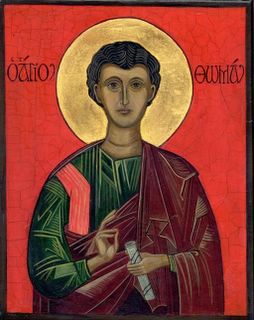
The state of Bishop and Prelate is above all these deeds, as to the Accidental reward. That this is so, appeareth out of holy Writ, where it saith thus in the Prophet Daniel: But go thou until the time prefixed, and thou shalt rest and stand in thy lot until the end of the days; which is to say thus much: The Angel when he had showed Daniel the secrets of God, he said to him thus: Go thou to the rest of this bodily death, and thou shalt stand in thy lot as a prophet at the last day. And verily as Daniel shall stand as a prophet at the last day of doom, and have the worship and excellency of a prophet above the Sovereign blessed reward of the love and sight of God, right so shalt thou stand as an Anchoret in that lot, and a Religious in the lot of the Religious, and so shall it be with other excellent deeds, and have a singular worship, passing other men at the day of doom. (John Climacus)
In Dante we meet a fair number of bishops and prelates as we walk through Inferno and Purgatorio. But there are also several in each sphere of heaven.
Yesterday I summarized the first four spheres. The fifth sphere welcomes warriors of the faith, those with particular fortitude for defending and advancing the kingdom of heaven on earth.
In the sixth sphere are just rulers who reinforce the relationship between God's creatures and with God.
Contemplatives reside in the seventh sphere. During their lives on earth they gave over their entire lives to building a relationship with God and, in this example, serving their neighbors.
In the eighth sphere are those who during their earthly lives best exemplified faith, hope, and love and in this way came closest to God and neighbor.
The ninth sphere is reserved for angels and all those who have never left the presence of God.
I have long believed in the grace by which I might be restored to wholeness in God. Do I believe in an "accidental reward", do I - should I - desire such a reward?
Wednesday, June 30, 2010

Tuesday, June 29, 2010
Also after these, and beneath these, are the taking of the order of Priest, either for cure of men’s souls, and to minister the Sacraments of holy Church, or else for singular Devotion to please God, and profit our neighbour, by the sacrifice of the precious body of our Lord Jesus Christ. Soothly these are special deeds, and declared to be excellent by the judgement of holy Church, and in the sight of our Lord. When they are done truly for God, they are excellent, and shall have special reward, each man in his degree, in the bliss of Heaven. (John Climacus)
Dante describes nine spheres of heaven. Each is inhabited by the blessed, but blessed in a particular way to reflect their own experiences.
The lowest sphere of heaven is for those who, while committed to God and neighbor, were inconstant... generally as a result of circumstances outside their control.
The second sphere is for those who have authentically served God and neighbor, but their motivation was self-serving.
The third sphere is for those who were in profound relationship with God and neighbor, but lacked temperance.
The fourth sphere is for those who have reflected the love of God in their relationship with neighbors through intellectual activity.
Tomorrow I expect Climacus will give me a chance to address the other five spheres. For now I am still pondering this "new" thought of a heavenly reward that is something other than radically egalitarian.
Dante describes nine spheres of heaven. Each is inhabited by the blessed, but blessed in a particular way to reflect their own experiences.
The lowest sphere of heaven is for those who, while committed to God and neighbor, were inconstant... generally as a result of circumstances outside their control.
The second sphere is for those who have authentically served God and neighbor, but their motivation was self-serving.
The third sphere is for those who were in profound relationship with God and neighbor, but lacked temperance.
The fourth sphere is for those who have reflected the love of God in their relationship with neighbors through intellectual activity.
Tomorrow I expect Climacus will give me a chance to address the other five spheres. For now I am still pondering this "new" thought of a heavenly reward that is something other than radically egalitarian.
Monday, June 28, 2010

Another reward there is that is Secondary, or Accidental, which our Lord giveth for special good deeds, which a man doth voluntarily, over that he is bound to do. Of these deeds three principal ones the Doctors of holy Church do make mention of, namely, Martyrdom, Preaching and Virginity. These works, inasmuch as they pass all others in excellency, shall have a special reward, which is called an Aureola, which is nought else but a singular worship and a special token ordained by God for reward of that special deed they did above others, over and above that Sovereign or Essential reward of the love of God which is common to him and to all others. Right so it is of all other special good deeds, which, if they be done sincerely, are specially acceptable in the sight of God, and in the judgement of holy Church are very excellent, as are the enclosing of Anchorets, done by the authority of holy Church, also entering into religion approved, and the stricter that the religion is, the more excellent is the deed in the judgement of holy Church. (John Climacus)
I am not a virgin. I do not anticipate martyrdom. I do preach.
These meditations -- because they are public -- are a form of preaching. Whenever we assert, proclaim, or declare in public, we are preaching. But clearly Climacus is referencing such preaching as demonstrates one's love of God and God's love for all.
May the meditations of my heart and the words of my mouth be acceptable to you, O God my strength and my redeemer.
The image is of John the Baptist preaching by Pieter Brueghel the Elder.
Sunday, June 27, 2010
For he that loveth God by charity most shall have most reward in the bliss of heaven for he shall there love God and know Him most and that is the Sovereign, or Essential reward, and according to this reward it may and shall fall out, that some manner of man or woman, as a lord or a lady, knight or esquire, merchant or ploughman, or what degree he be, in man or Yeoman may and shall have more reward than some priest or friar, monk or canon, or Anchoret enclosed. And why so? Soothly, because he loved God more in charity. (John Climacus)
I have never wondered about variation of heavenly reward. Even when considering Dante, I only think of the various rings of hell, not levels of heaven.
A heavenly existence is, for me, experienced as being one with God. End of story and, at least until today, end of speculation.
Over the years I have speculated about a process of reunification with God. For each and (nearly) all of us I have conceived that as we are received into God we experience the pain we have caused others.
If such a process is anywhere close to true, might not we also fully experience the love and joy we have caused others?
I still perceive the end-state being a shared fullness and oneness with God. But along the way there might well be a difference for those who love God and neighbor more.
I have never wondered about variation of heavenly reward. Even when considering Dante, I only think of the various rings of hell, not levels of heaven.
A heavenly existence is, for me, experienced as being one with God. End of story and, at least until today, end of speculation.
Over the years I have speculated about a process of reunification with God. For each and (nearly) all of us I have conceived that as we are received into God we experience the pain we have caused others.
If such a process is anywhere close to true, might not we also fully experience the love and joy we have caused others?
I still perceive the end-state being a shared fullness and oneness with God. But along the way there might well be a difference for those who love God and neighbor more.
Saturday, June 26, 2010
Nevertheless, that other men may not mistake this that I say, therefore I shall say it more plainly. Thou shalt understand that there be two rewards in the bliss of heaven, which our Lord giveth to chosen souls. The one is Sovereign and Principal, and is called the Essential Reward, and that is the knowing and loving of God according to the measure of charity given by God to the soul while she lived here in mortal body. This reward is best and Sovereign, for it is God Himself, and is common to all the souls that shall be saved, in what state or degree soever they live in holy Church, more or less according to the quantity and the muchness of their charity in this life, what degree soever they live in. (John Climacus)
With Climacus I do not read ahead. I spend most of my life trying to "read ahead" and predict what is still to come. For these morning meditations I purposefully engage what is presented in the moment and deal only with that.
This morning as I left my house a deer with two tiny fawns stood between me and the sunrise. I stood quietly. After the deer noticed me I slowly edged away to leave them in peace.
Usually I leave my house through a different door. On my usual path I would not have encountered this morning's verdency.
This is, I think, an example of the Essential Reward of knowing and loving God. It comes unexpected, it is beautiful, and it leaves one more whole than a moment before.
But if we become self-conscious with pride, or fear, or in some other way, God will ease away until we are better able to remain with the moment in full faith and love.
Oh fire of the Holy Spirit,
life of the life of every creature,
holy are you in giving life to forms...
Oh boldest path,
penetrating into all places,
in the heights, on earth,
and in every abyss,
you bring and bind all together
From you clouds flow, air flies,
Rocks have their humours,
Rivers spring forth from the waters
And earth wears her green vigour
Hildegard of Bingen
With Climacus I do not read ahead. I spend most of my life trying to "read ahead" and predict what is still to come. For these morning meditations I purposefully engage what is presented in the moment and deal only with that.
This morning as I left my house a deer with two tiny fawns stood between me and the sunrise. I stood quietly. After the deer noticed me I slowly edged away to leave them in peace.
Usually I leave my house through a different door. On my usual path I would not have encountered this morning's verdency.
This is, I think, an example of the Essential Reward of knowing and loving God. It comes unexpected, it is beautiful, and it leaves one more whole than a moment before.
But if we become self-conscious with pride, or fear, or in some other way, God will ease away until we are better able to remain with the moment in full faith and love.
Oh fire of the Holy Spirit,
life of the life of every creature,
holy are you in giving life to forms...
Oh boldest path,
penetrating into all places,
in the heights, on earth,
and in every abyss,
you bring and bind all together
From you clouds flow, air flies,
Rocks have their humours,
Rivers spring forth from the waters
And earth wears her green vigour
Hildegard of Bingen
Thursday, June 24, 2010

I say moreover for thy comfort, and for the comfort of all others who live in the state of Anchorets enclosed, and also by God’s grace, for the comfort of all them that enter into any religious order approved in holy Church, that all those who through the mercy of God among them shall be saved, shall have a special reward, and a singular worship in the bliss of heaven; for their state of living before other souls that had not that state in holy Church, though they were never so holy; which worship is better than all the worship of this world without comparison; for if thou couldst see what it is, thou wouldst not for the worship of this world, if thou mightest have it without sin, change thy state either of Anchoret or of religious, neither lose that singular reward in heaven, which reward is called the Accidental Reward. (John Climacus)
Six centuries after Climacus, Thomas Aquinas distinguishes between "essential bliss" and "accidental reward."
The essential bliss of perfect union with God is available to all true Christians. The further accidental reward is available only to those who have overcome some persistent foe or spiritual danger.
Following Aquinas, Henry Suso wrote, "Accidental reward consists in such particular delight as souls obtain by particular and meritorious works wherewith they have conquered here below, even as the souls of great doctors, steadfast martyrs, and pure virgins."
"But essential reward consists in the contemplative union of the soul with the pure Divinity, for she can never rest till she be borne above all her powers and capacities, and introduced to the natural entity of the Persons, and to the clear vision of their real essence."
The "particular delight" of accidental reward sounds a bit like a purified pride.
The image is of Mary, mother of God, with a crown showing aureas representing essential bliss and aureolas reflecting the accidental rewards of her particular victories (by Jan Van Eyck from the Ghent alarpiece)
And for this good will and good purpose that they have by the gift of God, they shall increase in grace and in charity here all their life long; and they shall have for this special will a special reward in the bliss of heaven above other chosen souls, who offered not wholly their will and their body to God’s service, neither openly nor privately as they did. All these, whom I call God’s servants, and of His court more specially, if they, through frailty and ignorance, when they feel such stirrings of vainglory, for the time delight therein, and perceive not that they do so, for that their reason and senses are letted through that liking which they feel, so that they cannot so well see those stirrings, they sin not deadly in this liking of vainglory. For that will that they have in general set in their heart before, to please God, and to forsake all manner of sin, if they knew it, keepeth them here, that they sin not deadly in such stirrings, and in all other that come of frailty, and will keep them still as long as the ground of that will is kept whole. (John Climacus)
We are each tempted by pride, even those servants of God who most effectively discipline their will.
In serving God it is easy to momentarily mistake the glory of God as our own glory, and to like the feeling. This is inaccurate. Acting on the delusion is dangerous to ourselves and to others.
Feeling pride is practically innate. Deluded perception is widespread. Recognizing the error and refusing to act on it keeps us whole.
We are each tempted by pride, even those servants of God who most effectively discipline their will.
In serving God it is easy to momentarily mistake the glory of God as our own glory, and to like the feeling. This is inaccurate. Acting on the delusion is dangerous to ourselves and to others.
Feeling pride is practically innate. Deluded perception is widespread. Recognizing the error and refusing to act on it keeps us whole.
Wednesday, June 23, 2010
Also, what man or woman soever he be; in what degree soever he liveth in holy Church, priest, clerk or layman, widow, maid or wife that will for the love of God and salvation of his, or her, own soul forsake all the worships and likings of this world, in the world, in his or her heart truly and fully betwixt God and themselves, and all unnecessary business and earthly things, even to what they have bare need of, and offer up their will entirely to be His servants, in the constant exercise of devout prayers and holy thoughts, with other good deeds that they may do bodily and ghostly, and keep their will whole to God stedfastly, all such are God’s special servants in holy Church.(John Climacus)
Very purposefully I choose to read the spiritual writings of contemplatives, monastics, and mystics. All emphasize forsaking "unnecessary business and earthly things, even to what they have bare need of."
And each time I read this teaching I resist and argue. They are Platonic, advocating a pure form of perfect truth. I am Aristotelian, trying to find some middle way that can be broadly applied.
But as Aristotle was a student of Plato, I am a student of theirs. While I seek another expression of truth, I do not deny the truth they teach. Indeed, they have demonstrated their truth in how they lived their lives. I am still seeking.
Very purposefully I choose to read the spiritual writings of contemplatives, monastics, and mystics. All emphasize forsaking "unnecessary business and earthly things, even to what they have bare need of."
And each time I read this teaching I resist and argue. They are Platonic, advocating a pure form of perfect truth. I am Aristotelian, trying to find some middle way that can be broadly applied.
But as Aristotle was a student of Plato, I am a student of theirs. While I seek another expression of truth, I do not deny the truth they teach. Indeed, they have demonstrated their truth in how they lived their lives. I am still seeking.
Tuesday, June 22, 2010

And this is a courtesy of our Lord, granted to all those who are specially His servants and domestics of His court, as are all those that for His love forsake, with a good true will, all worldly and all fleshly sin, and give themselves wholly both body and soul unto His service, with all their might and cunning, as do truly Anchorites enclosed, and all truly religious persons, who for the love of God and salvation of their own souls enter into any religious order approved by holy Church. Or else, if it be so, that they enter first for worldly respects, or for their bodily sustenance, or some other such; if they repent them and turn it into a spiritual respect, as for the service of God; these as long as they keep this will and pursue it as well as their frailty will permit, are true religious persons. (John Climacus)
Our original motivation may be faulty and self-serving. But if we nonetheless encounter God and neighbor and open ourselves to being in relationship, God can use even our mistaken motivation.
At the opening of the seventh chapter of Luke's gospel, we are told of Jesus and the Centurion. The Roman soldier's servant was ill and because the Centurion "valued him highly," he seeks out Jesus to heal the servant.
While the Centurion may have been pursuing his self-interest; his concern for his servant, the relationship he had established with the people of the town, and his straightforward manner left even Jesus "amazed."
The image is of Jesus and the Centurion by Veronese.
Monday, June 21, 2010
But a man or woman that disposeth himself or herself, to live contemplatively, if it be so that he forsake himself as to his own will, and offer up himself wholly to God with a full general will, that he will not sin in pride wittingly, nor have any joy in himself wilfully, but only in God, as far as he can, and may; and notwithstanding after this full will offered up to God, feeleth many stirrings of vain-glory, and delighteth in them for the time (because at the first he did not so well perceive them), this liking is but venial sin, and, namely, if it be so, that when he cometh to himself he reproveth himself, and withstandeth this stirring with displeasure of his will, and asketh mercy and help of God; then the liking which before was some sin, our Lord of his mercy soon forgiveth it; and moreover he shall have reward for his good travail in withstanding it. (John Climacus)
The contemplative life has much to commend it. It gives attention where attention is due.
At least it does when it gives attention to prayer, study, and work that glorifies God and give thanks.
An overscrupulous attention to our sinfulness is just as complicating to our relationship with God and neighbor as any other.
In the third chapter of Romans, Paul writes,
Therefore no one will be declared righteous in his sight by observing the law; rather, through the law we become conscious of sin. But now a righteousness from God, apart from law, has been made known, to which the Law and the Prophets testify. This righteousness from God comes through faith in Jesus Christ to all who believe. There is no difference,for all have sinned and fall short of the glory of God, and are justified freely by his grace through the redemption that came by Christ Jesus. (Romans 3:20-25)
The contemplative life has much to commend it. It gives attention where attention is due.
At least it does when it gives attention to prayer, study, and work that glorifies God and give thanks.
An overscrupulous attention to our sinfulness is just as complicating to our relationship with God and neighbor as any other.
In the third chapter of Romans, Paul writes,
Therefore no one will be declared righteous in his sight by observing the law; rather, through the law we become conscious of sin. But now a righteousness from God, apart from law, has been made known, to which the Law and the Prophets testify. This righteousness from God comes through faith in Jesus Christ to all who believe. There is no difference,for all have sinned and fall short of the glory of God, and are justified freely by his grace through the redemption that came by Christ Jesus. (Romans 3:20-25)
Sunday, June 20, 2010
Nevertheless, another worldly man that loveth his own worship and pursueth after it, if he love it not so much, that he would not for the getting or the saving of it do a deadly sin, or break charity to his neighbour, he sinneth not deadly but venially, more or less according to the measure of his love and of his liking, with other circumstances. (John Climacus)
The distinction Climacus makes between mortal and venial sins is suspect.
The doctrine suggests there are some sins beyond forgiving and others not so. The short distinction is between inclination and action. Short of action, most sins are venial.
But is not anything -- thought, word or deed -- sinful that complicates our relationship with God? And did not Jesus assure us of God's forgiveness of sin?
The distinction Climacus makes between mortal and venial sins is suspect.
The doctrine suggests there are some sins beyond forgiving and others not so. The short distinction is between inclination and action. Short of action, most sins are venial.
But is not anything -- thought, word or deed -- sinful that complicates our relationship with God? And did not Jesus assure us of God's forgiveness of sin?
Saturday, June 19, 2010

But now thou wilt say: Who doth choose the love of his worship, credit or honour, instead of his God; I answer, that he that loveth his worship, as for to seem better and greater of estate than any other, and travaileth about it as much as he can; if he love it so much that for the getting, or keeping, or the saving of it, he breaketh the commandment of God, or breaketh love and charity to his neighbour, or is ready, or in full will to break it rather than he would forbear his worship, or lose anything of it, either in his name, or in his estate, or of fulfilling his will; soothly he sinneth deadly, for he loveth his worship, and chooseth it more than the love of God and of his neighbour. And nevertheless, the man that sinneth thus deadly will say with his mouth that he will not choose pride for his god, but he beguileth himself, for he chooseth it for his god in his deeds. (John Climacus)
I'm not entirely sure what Climacus is saying.
But my best guess is that anything we allow to complicate our relationship with God or neighbor is prideful idoltry.
Even if the complication might be celebration of the eucharist, but we so value a particular celebration that we alienate ourself from neighbors who celebrate otherwise. This is pride.
Even if we might be committed to serving the hungry, and are so engaged in this service that we will steal from the rich to give to the poor. This is pride.
We serve God and neighbor. All else is complement or distraction.
The image is of Madonna on a Cross.
Friday, June 18, 2010
But now, sayest thou, who is such a fool as to choose pride for his God? No man living, sure, will do so. To this I answer that I cannot tell thee in special who sinneth deadly in pride. But in general I shall say that there be two sorts of pride, one bodily and the other spiritual. Bodily pride is of fleshly living men; spiritual is of hypocrites and heretics. These three sin deadly in pride; I mean such fleshly living men as St Paul speaks of: If ye live after the flesh, ye shall die. Then say I thus: That a worldly man who loveth and seeketh principally the worship of himself, and chooseth the liking of it as the rest of his heart, and the end of his bliss, he sinneth deadly. (John Climacus)
Do I seek principally the worship of myself?
To worship can have several meanings: to honor, to offer praise, to give thanks, to participate in sacred ritual, to revere, to fear... and more.
I cannot be sure of the Greek that Climacus might have used, there are several Greek terms each commonly translated by the English "worship."
But I wonder if λατρεύω (latreuo) may be his choice. This is the Greek that is used in the gospel of Luke, when Jesus quotes scripture to Satan: "It is written, 'You shall worship (latreuo) your God and serve (latreuo)him only." (Luke 4:8)
The verb is derived from the common term for a hired hand who would do menial work. Menial has come to mean lowly, but it originally meant to "belong to a household." It is the work of maintaining where we live.
Who do I serve? To whose household do I belong?
Do I seek principally the worship of myself?
To worship can have several meanings: to honor, to offer praise, to give thanks, to participate in sacred ritual, to revere, to fear... and more.
I cannot be sure of the Greek that Climacus might have used, there are several Greek terms each commonly translated by the English "worship."
But I wonder if λατρεύω (latreuo) may be his choice. This is the Greek that is used in the gospel of Luke, when Jesus quotes scripture to Satan: "It is written, 'You shall worship (latreuo) your God and serve (latreuo)him only." (Luke 4:8)
The verb is derived from the common term for a hired hand who would do menial work. Menial has come to mean lowly, but it originally meant to "belong to a household." It is the work of maintaining where we live.
Who do I serve? To whose household do I belong?
Thursday, June 17, 2010
But when it is venial and when it is deadly I cannot fully tell thee; nevertheless, a little I shall say, as methinketh. When the stirrings of pride are received and turned into liking, so far that the heart chooseth them for a full rest and a full delight, and seeketh no other end, but only the liking therein, then is this pride deadly sin; for he maketh and chooseth this delight as his god, without any opposing of his reason or will, and therefore it is deadly sin. (John Climacus)
I have - or at least had - mixed motives for writing these morning meditations.
When I began several years ago, I hoped that I could prompt a discussion that would generate readership that would help me make a living writing on spiritual themes.
There was some pride in this motivation. But there have been no discussions and there are very few readers.
I have persisted because there is something about publishing, even for one or two others that sharpens my attention and pushes me to compose on the most sluggish mornings.
Being an honored and affluent author is a prideful vision. But it was not my only end and did not keep me from forsaking the pride and staying with the task.
I have - or at least had - mixed motives for writing these morning meditations.
When I began several years ago, I hoped that I could prompt a discussion that would generate readership that would help me make a living writing on spiritual themes.
There was some pride in this motivation. But there have been no discussions and there are very few readers.
I have persisted because there is something about publishing, even for one or two others that sharpens my attention and pushes me to compose on the most sluggish mornings.
Being an honored and affluent author is a prideful vision. But it was not my only end and did not keep me from forsaking the pride and staying with the task.
Wednesday, June 16, 2010

But thou sayest that thou canst not eschew such stirrings of pride, for oft thou feelest them against thy will, and therefore thou holdest them no sin; or, if they be sin, they be nought but venial. As to this, I answer that the feeling of these stirrings of pride, or of any other sin, which spring either out of the corruption of this foul image or by incasting or suggestion of the enemy, is no sin so far as to the feeling of them. Nevertheless, when by negligence and thy own blindness this feeling is received unwarily in thy thoughts, and turned into love and liking, then is there sin in it more or less according to the measure of this love, sometime venial and sometime deadly. (John Climacus)
Feeling pride is no sin, but loving and liking prideful feeling is potentially deadly.
Pride is, at least, a sense of satisfied self-sufficiency; a confidence in my own ability to discern and resolve.
Pride can become an adoration of the self that excludes thanks and praise to God.
Offering thanks and praise to God is the best discipline for keeping pride in its place.
And in offering thanks and praise to God we experience a joy far beyond that of self-sufficiency.
Tuesday, June 15, 2010
Pride is nothing else (as the learned say) but love of thy own excellency, that is, of thy own worship. The more thou lovest and likest thine own honour, the more thou hast of this pride; the more thou hast of this image in thee. If thou feel in thy heart a stirring of pride, that thou art holier, wiser, better and more virtuous than others, that God hath given thee grace to serve Him better than others do, and thinkest all others beneath thee, and thyself above them, or any other thought of thyself, which showeth to the eye of thy soul an excellency and a surpassing of others, and thou feelest a love and delight in this stirring, and a vain pleasing in thyself, that indeed thou art so; this is a token that thou bearest this black image, which, though it be privy from the eyes of men, yet it appeareth openly in God’s sight. (John Climacus)
I have some of this pride, but this seems less-troublesome than another sort. Though, I suppose, one might be an outgrowth of the other.
There are matters on which - or moments when - I perceive myself wiser, better, and more virtuous than others. But this is transitory and does not define my relationship with others.
More troublesome is a tendency to self-assertion for external validation. I would like to be seen by others as wiser, better, and more virtuous. And these "others" do not necessarily include God.
My sin-of-pride has its source in the direct opposite of a "vain pleasing in thyself." I am not pleased in myself, which drives me to please others, or perhaps more accurately, to want others to be pleased with me.
I seek wisdom, goodness, and virtue, but not for their own sake, but as self-adornment.
I have some of this pride, but this seems less-troublesome than another sort. Though, I suppose, one might be an outgrowth of the other.
There are matters on which - or moments when - I perceive myself wiser, better, and more virtuous than others. But this is transitory and does not define my relationship with others.
More troublesome is a tendency to self-assertion for external validation. I would like to be seen by others as wiser, better, and more virtuous. And these "others" do not necessarily include God.
My sin-of-pride has its source in the direct opposite of a "vain pleasing in thyself." I am not pleased in myself, which drives me to please others, or perhaps more accurately, to want others to be pleased with me.
I seek wisdom, goodness, and virtue, but not for their own sake, but as self-adornment.
Monday, June 14, 2010
To this I answer, granting thee that I hope thou dost all these works and more; and yet may it be true as I say. Thou art busy to thy power to stop these rivers without, but the spring within perhaps thou leavest whole. Thou art like to a man which had in his yard a stinking well, with many runnings from it, who went and stopped the runnings, and left the spring whole, and thought all was well; but the water sprang up at the ground of the well, and stood still insomuch that it corrupted all the fairness of his garden, and yet did no water run out. Right so may it be with thee, if it be so that thou hast by grace stopped the rivers of this image without, so far that all is done well, but beware of the spring within; surely unless thou stop and cleanse that as much as thou canst, it will corrupt all the flowers of the garden of thy soul, show they never so fair outwardly in sight of men. (John Climacus)
I am aware of some streams of which Climacus has written, so some aspect of the source is probably present.
Of the seven deadly sins I am most aware of pride, lust, and envy. The other four very seldom - even never - seem to trouble me.
As Climacus writes, these three are subterranean. They do not flow from me, but I can concur they probably do complicate my relationship with Jesus and others.
Climacus continues:
But now, sayest thou, whereby shall I know that the ground is stopped, if I go about it? As to this I shall tell thee, how by trying and experience thou shalt know this image if it be in thee, and how much it is in thee, and thereby shalt thou know how much it is stopped in thee, and how little also. And inasmuch as pride is the principal river, I shall begin with it.
So tomorrow we will begin with pride.
I am aware of some streams of which Climacus has written, so some aspect of the source is probably present.
Of the seven deadly sins I am most aware of pride, lust, and envy. The other four very seldom - even never - seem to trouble me.
As Climacus writes, these three are subterranean. They do not flow from me, but I can concur they probably do complicate my relationship with Jesus and others.
Climacus continues:
But now, sayest thou, whereby shall I know that the ground is stopped, if I go about it? As to this I shall tell thee, how by trying and experience thou shalt know this image if it be in thee, and how much it is in thee, and thereby shalt thou know how much it is stopped in thee, and how little also. And inasmuch as pride is the principal river, I shall begin with it.
So tomorrow we will begin with pride.
Sunday, June 13, 2010

But now, sayest thou, how can this be true? For I have forsaken the world, and am shut up in a monastery; I meddle with no man, I chide not, I strive not, I neither buy nor sell, I have no worldly business, but by the mercy of God keep myself chaste, and withhold me from delights. And, besides this, I pray, I watch, I labour bodily and ghostly, as well as I can; how should this image then be so much in me as thou speakest of? (John Climacus)
I have not forsaken the world. I meddle with many men and women.
I do not chide much, but I strive a great deal.
I buy, sell, and am very busy with non-spiritual tasks and goals.
I am not chaste, in attitude or living. I withhold myself from some things, but not many.
I pray. I watch. I could be more disciplined in both body and spirit, but I am not entirely undisciplined.
So, perhaps, this dark image - this void, this naught - is also within me?
The image is the Temptation of St. Anthony by Salvidor Dali.
Saturday, June 12, 2010
I have already told thee of this image, that it is nought, Nevertheless, if thou canst not understand how this should be an image, seeing nought can be nothing else but nought, and so for all my telling thou canst make nothing of it, I shall therefore tell thee more plainly of this image as methinketh. This image is a false inordinate love of thyself. Out of this there come all manner of sins by seven rivers, Which are these: pride, envy, anger, sloth, covetousness, gluttony and lechery. Lo, this is somewhat that thou mayest understand. By some one of these rivers runneth out all manner of sin, and putteth thee out of the state of charity, if it be a deadly sin; or letteth the fervour of thy charity if it be venial. Now mayest thou grope at least that this image is not altogether nought; but it is much of bad, for it is a great spring of love unto thyself, with such rivers as I have said. (John Climacus)
It seems to me (methinketh) that Climacus is confusing a "false inordinate love of thyself" with a false understanding of our selves. We may also have an inordinate love of our false self, but this is a secondary condition, a river flowing from the spring, not the spring itself.
We are to love our neighber as our self. Jesus was quoting from Leviticus 19:18, "You shall not take vengeance, nor bear any grudge against the sons of your people, but you shall love your neighbor as yourself; I am the Lord."
But knowing this self is not easy. In Leviticus the Hebrew is literally you shall love your neighbor כָּמוֹךָ or kemo: according to, as, when. The self is implied. There are at least twenty-six Hebrew words for self and in the vast majority the sense of self is implied in the verb.
Perhaps the divine sense of self is less a noun and more a verb.
It seems to me (methinketh) that Climacus is confusing a "false inordinate love of thyself" with a false understanding of our selves. We may also have an inordinate love of our false self, but this is a secondary condition, a river flowing from the spring, not the spring itself.
We are to love our neighber as our self. Jesus was quoting from Leviticus 19:18, "You shall not take vengeance, nor bear any grudge against the sons of your people, but you shall love your neighbor as yourself; I am the Lord."
But knowing this self is not easy. In Leviticus the Hebrew is literally you shall love your neighbor כָּמוֹךָ or kemo: according to, as, when. The self is implied. There are at least twenty-six Hebrew words for self and in the vast majority the sense of self is implied in the verb.
Perhaps the divine sense of self is less a noun and more a verb.
Friday, June 11, 2010
This is the ghostly travail I spake of, and the cause of all this writing is to stir thee thereto, if thou have grace. This darkness of conscience and this nought is the image of the first Adam. St Paul knew it well, for he said thus of it: As we have before borne the image of the earthly man, that is the first Adam, right so that we might now bear the image of the heavenly man, which is Jesus, the second Adam. St Paul bore this image oft full heavily, for it was so cumbersome to him that he cried out of it, saying thus: O who shall Deliver me from this body and this image of death? And then he comforted himself and others also thus: The grace of God through Jesus Christ. (John Climacus)
As Climacus notes, Paul was not happy with his body, and discouraged us from being too happy with our own. Paul explained, "I am unspiritual, sold as a slave to sin. I do not understand what I do. For what I want to do I do not do, but what I hate I do." (Romans 7:14-15)
But what are we to make of Jesus? He lived among us fully human. Jesus returned from death in his body. He said, "Look at my hands and my feet, that it is I myself. Touch me and see, because a ghost does not have flesh and bones as you can see I have." (Luke 24:10)
Climacus offers that the issue is not one of body versus spirit, but of a deeper identity that shapes both body and spirit. Conscience is a knowledge-within. How do we know ourselves? To the extent we can know ourselves wholly, the image of the first Adam is replaced entirely by the second.
As Climacus notes, Paul was not happy with his body, and discouraged us from being too happy with our own. Paul explained, "I am unspiritual, sold as a slave to sin. I do not understand what I do. For what I want to do I do not do, but what I hate I do." (Romans 7:14-15)
But what are we to make of Jesus? He lived among us fully human. Jesus returned from death in his body. He said, "Look at my hands and my feet, that it is I myself. Touch me and see, because a ghost does not have flesh and bones as you can see I have." (Luke 24:10)
Climacus offers that the issue is not one of body versus spirit, but of a deeper identity that shapes both body and spirit. Conscience is a knowledge-within. How do we know ourselves? To the extent we can know ourselves wholly, the image of the first Adam is replaced entirely by the second.
Thursday, June 10, 2010

Nevertheless, in this dark conscience it behoves him to labour and sweat; that is to say, it behoveth thee to draw thy thoughts into thyself from all bodily things as much as thou canst, and then when thou findest right nought but sorrow and pain, and blindness in this darkness, if thou wilt find Jesus, thou must suffer the pain of this dark conscience, and abide awhile therein. And here also thou must beware that thou take Jesus Christ into thy thoughts against this darkness in thy mind, by busy prayer and fervent desire to God, not setting the point of thy thoughts on that aforesaid nought, but on Jesus Christ whom thou desirest. Think stiffly on His Passion and on His humility, and through His might thou shalt arise. Do as if thou wouldst beat down this dark image, and go through-stitch with it. Thou shalt hate and loathe this darkness, and this nought, just as the devil, and thou shalt despise and all to break it. Brest it. For within this nought is Jesus hid in His joy, whom thou shalt not find with all thy seeking, unless thou pass this darkness of conscience. (John Climacus)
Jesus is not hidden to me.
I may not always recognize him. I may even try to ignore him.
But Jesus is always present.
I hesitated in writing "always", but I cannot remember when Jesus was not very close at hand. His presence is cause for confidence, embarrassment, joy, tears, hope and much more.
Jesus is so present with me that I almost certainly take Jesus for granted. I am not intimate with Jesus. But he is intimate with me.
I have neglected a great gift.
Despite all stay with me, Jesus. Stay with us.
The image is of Christ at Emmaus by Caravaggio
Wednesday, June 9, 2010
But because thou art not reformed, therefore when thy soul draweth into herself from all bodily things and delights, thou findest nothing but emptiness, darkness and heaviness; so that thou thinkest it an hundred years till thou be out again to some bodily delight or vain thoughts, and it is no wonder; for he that cometh home to his house, and findeth nothing but stink and smoke, and a chiding wife, he will quickly run out of it. Even so thy soul, finding no comfort in itself, but black smoke of spiritual blindness, or great chiding of guilty or fleshly thoughts, crying upon thee that thou canst not be in peace, verily it will quickly be weary of being alone and recollected, until it be out again. And this is the darkness of conscience. (John Climacus)
I enjoy my time alone. I prefer when my soul draweth into herself.
To do so is not entirely happy, but it is far from stink, smoke, and chiding wife.
There are unresolved regrets, bruised pride, and awareness of how I have hurt others.
But there is also peace, wholeness, lightness, restoration, and fulfillment.
Perhaps I am not mired in sin, but I can still see the muddy pit.
I enjoy my time alone. I prefer when my soul draweth into herself.
To do so is not entirely happy, but it is far from stink, smoke, and chiding wife.
There are unresolved regrets, bruised pride, and awareness of how I have hurt others.
But there is also peace, wholeness, lightness, restoration, and fulfillment.
Perhaps I am not mired in sin, but I can still see the muddy pit.
Tuesday, June 8, 2010
This nothing is nought else but darkness of conscience, and a lacking of the love of God and of light; as sin is nought but a want of good, if it were so that the ground of sin was much abated and dried up in thee, and thy soul was reformed right to the image of Jesus; then if thou didst draw into thyself thy heart, thou shouldst not find this nought, but thou shouldst find Jesus; not only the naked remembrance of this name, but Jesus Christ in thy soul readily teaching thee; thou shouldst there find light of understanding and no darkness of ignorance, a love and liking of Him, and no pain of bitterness, heaviness or tediousness of Him. (John Climacus)
I have an intellectual relationship with God.
I approach God as ultimate reality, beyond my ability to understand, but an engaging and worthy challenge.
I do not have (much) of a personal relationship with Jesus. I read the Jesus narrative to hear God's intention. My Christology focuses on God more than Jesus. It can be, usually is, coolly abstract.
Jesus is not absent, but I have not opened my heart and soul to Jesus in the way I have opened my mind to God.
Help me Jesus to welcome you.
I have an intellectual relationship with God.
I approach God as ultimate reality, beyond my ability to understand, but an engaging and worthy challenge.
I do not have (much) of a personal relationship with Jesus. I read the Jesus narrative to hear God's intention. My Christology focuses on God more than Jesus. It can be, usually is, coolly abstract.
Jesus is not absent, but I have not opened my heart and soul to Jesus in the way I have opened my mind to God.
Help me Jesus to welcome you.
Monday, June 7, 2010

Peradventure now thou beginnest to think with thyself what this image is like, and that thou shouldst not study much upon it, I will tell thee. It is like no bodily thing. What is it then, sayest thou? Verily it is nought, or no real thing, as thou shalt find, if thou try by doing as I have spoken; that is, draw in thy thoughts into thyself from all bodily things, and then shalt thou find right nought wherein thy soul may rest. (John Climacus)
The soul is absent.
In separation from God it has withered.
All that is left is the vessel, a void, the barest impression of what once was.
This absence is the source of our worry and dis-ease.
We seek presence.
The image is of Mother as Void by Anish Kapoor.
Sunday, June 6, 2010
This image and this black shadow thou bearest about with thee wheresoever thou goest; out of this spring many great streams of sin, and small ones also. Just as out of the image of Jesus, if it be reformed in the beams of spiritual light will spring and ascend up towards heaven burning desires, pure affections, wise thoughts and all comeliness of virtues. Even so out of this image spring stirrings of pride, of envy and such other, which cast thee down from the comeliness of a man into a beast’s likeness. (John Climacus)
Last night out of a troubled sleep I cried out, remembering a stream of sin now twenty years old. I had seen this black shadow.
The shadow has no distinct shape. It is an image of my self as seen in the mirrors of a fun house: shifting this way and then another, bloating, thinning, wierdly morphing with each step.
The shadow cannnot find - even resists - a settled form. It shapes itself to where it finds itself. It has no integrity.
Last night out of a troubled sleep I cried out, remembering a stream of sin now twenty years old. I had seen this black shadow.
The shadow has no distinct shape. It is an image of my self as seen in the mirrors of a fun house: shifting this way and then another, bloating, thinning, wierdly morphing with each step.
The shadow cannnot find - even resists - a settled form. It shapes itself to where it finds itself. It has no integrity.
Saturday, June 5, 2010
This will be painful; for vain thoughts will press into thy heart very thick, to draw thy mind down to them. And in doing thus thou shalt find somewhat, but not Jesus whom thou seekest, but only a naked remembrance of His name. But what then shalt thou find. Surely this: a dark and ill-favoured image of thy own soul, which hath neither light of knowledge nor feeling of love of God. This image, if thou behold it heedfully, is all inwrapped and clothed with black stinking rags of sin, as pride, envy, anger, covetousness, gluttony, sloth and luxury. This is not the image of Jesus, but the image of sin, which St Paul calleth a body of sin and of death. (John Climacus)
A distinguished elderly woman explained that on her 75th birthday she had removed all of her clothes and stood naked before the mirror.
She carefully examined every inch of her body. She was horrified by how little resemblance it held to her self-image.
Climacus urges us to an even more courageous self-examination of our soul. He promises this is the way to Jesus.
A distinguished elderly woman explained that on her 75th birthday she had removed all of her clothes and stood naked before the mirror.
She carefully examined every inch of her body. She was horrified by how little resemblance it held to her self-image.
Climacus urges us to an even more courageous self-examination of our soul. He promises this is the way to Jesus.
Friday, June 4, 2010

To do this thou shalt cease for a time from all bodily works, and from all outward business as much as thou canst, then shalt thou draw thy whole thought into thyself from all thy bodily senses, which thou must hold in and restrain from wandering forth, so that thou take no heed of anything thou seest or hearest or feelest, and after this draw in thy thoughts nearer from all imaginations of any bodily deeds done before by thee, or of any other men’s deeds; and this is not difficult to be done at that time when thou hast devotion, but thou must do it also when thou hast no such devotion, and then it will be somewhat difficult. And set thy intent and full purpose, as if thou wouldst not seek nor find anything but only the grace and spiritual presence of Jesus.(John Climacus)
Attention is difficult.
We are creatures of many parts. Our minds are overflowing with hopes, joys, anxieties,and entirely too many instrumental tasks.
To be present to Jesus, to others, even to ourselves is atypical.
But Jesus is only in the present.
Only by anchoring our mind to the here and now can we meet Jesus. In stillness we find that Jesus is already here.
Thursday, June 3, 2010
Thou hast heard already what thy soul is, and what dignity and beauty it had, and how it lost it, and also how it may by grace and busy travail be somewhat recovered again, in feeling, in part in this life. Now I shall tell thee (according to my feeble ability) how thou mayest enter into thyself to see the ground of sin, and destroy it as much as thou canst, and so recover a part of thy soul’s dignity. (John Climacus)
I have been in conversation with Climacus - climbing his stair - since the beginning of Lent.
Conversation was a struggle at the start. But I am better at listening than early on, more familiar with his hopes and concerns.
We have discussed contemplaton, God's gifts, and the nature of the human soul. The next several chapters focus on sin.
I am not thrilled at the prospect of spending the summer and probably more on pride, envy, wrath, covetousness, and the whole gang.
But may I listen more carefully, precisely because of my reluctance.
I have been in conversation with Climacus - climbing his stair - since the beginning of Lent.
Conversation was a struggle at the start. But I am better at listening than early on, more familiar with his hopes and concerns.
We have discussed contemplaton, God's gifts, and the nature of the human soul. The next several chapters focus on sin.
I am not thrilled at the prospect of spending the summer and probably more on pride, envy, wrath, covetousness, and the whole gang.
But may I listen more carefully, precisely because of my reluctance.
Wednesday, June 2, 2010
Also of charity He saith thus: This is My commandment, that ye love one another as I loved you, for by that men shall know you for My disciples. Not that you work miracles, or cast out devils, or preach, or teach, but that each one of you love one another in charity. If therefore thou wilt be like Him, have humility and charity, Now thou knowest what charity is, namely, To love thy neighbour as thyself. (John Climacus)
Humility is a precondition of love.
In humility we come to know our selves. In knowing our selves we can better empathize with others.
Through empathy - feeling the passion of an other - we recognize what we share with another: good, bad, better, and worse.
Empathy alone is not love, but feeling the passion of an other is not far from feeling passion for another.
In humility such passion seeks to serve the other, not the self.
Humility is a precondition of love.
In humility we come to know our selves. In knowing our selves we can better empathize with others.
Through empathy - feeling the passion of an other - we recognize what we share with another: good, bad, better, and worse.
Empathy alone is not love, but feeling the passion of an other is not far from feeling passion for another.
In humility such passion seeks to serve the other, not the self.
Tuesday, June 1, 2010

There is not any virtue nor any good work that can make thee like to our Lord without humility and charity, for these two above all others are most acceptable to Him, which appeareth plainly in the gospel, where our Lord speaketh of humility thus: Learn of Me, for I am meek and humble in heart. He saith not, Learn of me to go barefoot, or to go into the desert, and there to fast forty days, nor yet to choose to yourselves disciples (as I did), but learn of Me meekness, for I am meek and lowly in heart. (John Climacus)
The meek shall inherit the earth. In gentleness and openness to God, the meek will know God's kingdom here and now.
The original Greek from which we have derived meek is πραΰς (praus). This suggests gentleness, calmness, mildness, and strength under control.
In the Republic Plato notes that the sheepdog is meek with the sheep and fierce with the wolves.
Jesus is the good shepherd, strong, attentive, calm; but fierce when either sheep or pasture are threatened.
I suspect attention allows us to be calm and being calm is a precondition to being gentle.
The image is of Christ as Good Shepherd from the catacombs at Rome.
Subscribe to:
Comments (Atom)